6 Oct 2026
Tracing Infrastructure Supporting Seamless Transitions Between Live Events and Table Games

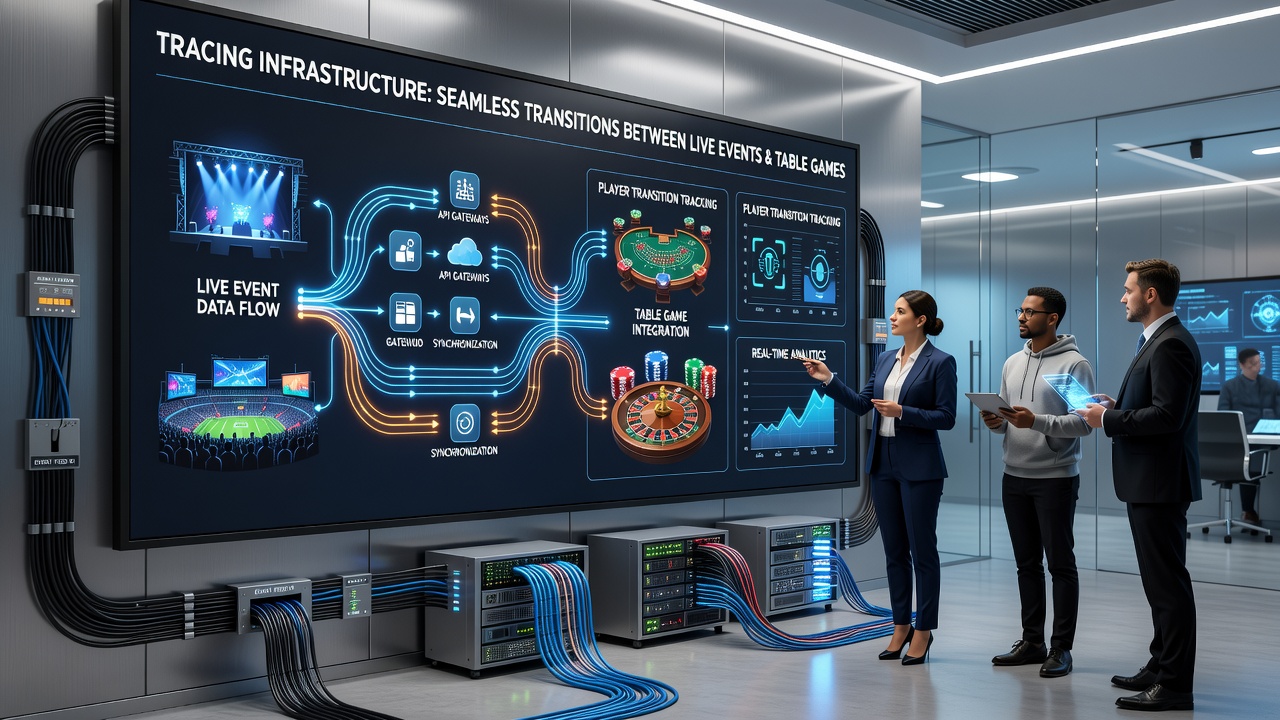
Modern gaming platforms rely on sophisticated tracing infrastructure to connect live events with table games, allowing participants to shift between sports betting streams and casino table interfaces while maintaining continuous session data and transaction records. This setup draws on real-time data pipelines, centralized user authentication systems, and distributed ledger components that log every action across both environments.
Core Components of the Tracing Systems
Operators deploy application programming interfaces that synchronize betting ledgers from live events directly into table game modules, while background services track player positions, wager amounts, and payout histories without requiring manual re-entry. Data centers positioned in multiple regions handle the load through load-balancing algorithms that route requests based on latency measurements and regulatory jurisdiction rules. Researchers at academic institutions have documented how these connections reduce session drop-off rates when users move from a live football match feed into a blackjack table.
Encryption layers protect the data streams during transitions, and audit logs capture timestamps for each switch so regulators can review sequences of activity later. Companies integrate cloud-based analytics engines that flag unusual patterns across both live event and table game segments, feeding the results into compliance dashboards used by oversight bodies.
Implementation Across Regions
In North America, several state-level frameworks require operators to maintain immutable records of all transitions, and similar requirements appear in European directives that took effect in prior years. Australian authorities have examined how tracing tools support responsible gambling measures by linking activity across different game types. Data from industry associations indicates that platforms using unified tracing layers report higher retention figures during peak viewing periods for major sporting events.
One documented case involved a European operator that linked its live tennis coverage to roulette tables through a single sign-on system backed by blockchain timestamps, allowing regulators to trace every chip movement back to the originating live event bet. Observers note that such integrations became more common after 2024 as hardware costs for high-speed logging servers declined.
Regulatory Developments Scheduled for October 2026
Updated technical standards scheduled for rollout in October 2026 in parts of Asia and the Middle East will mandate enhanced cross-game tracing capabilities, including mandatory API endpoints that export transition logs in standardized formats. These measures build on existing requirements in jurisdictions such as those overseen by the Nevada Gaming Control Board and draw from recommendations published by the International Association of Gaming Regulators. Operators have already begun testing the new export protocols in pilot environments to verify compatibility with current table game management software.
Figures released by research groups show that jurisdictions adopting similar standards earlier experienced measurable reductions in disputed transaction claims, because complete audit trails made reconciliation faster. The October 2026 updates also emphasize interoperability between different software vendors, so platforms can switch underlying tracing providers without rebuilding entire user interfaces.
Technical Challenges and Solutions
Latency remains a primary concern when routing data between live event feeds and table game engines, especially during high-traffic periods such as championship finals. Engineers address this through edge computing nodes placed near major population centers that pre-process transition requests before they reach central servers. Studies from university engineering departments have measured average handoff times dropping below 200 milliseconds on optimized networks.
Security teams layer additional monitoring on top of the core tracing infrastructure, watching for attempts to exploit transition points. Regular penetration testing conducted by independent firms confirms that well-designed systems resist injection attacks aimed at altering logged transition records. Those who maintain these platforms report that redundancy across at least three geographic zones prevents single-point failures during major live events.
Conclusion
Tracing infrastructure continues to evolve as operators respond to regulatory timelines and technological improvements. The systems already in place demonstrate how continuous data flows support movement between live events and table games, and preparations for the October 2026 standards will further standardize those connections across additional markets. Nevada Gaming Control Board guidelines and reports from the International Association of Gaming Regulators provide reference points for the technical specifications driving these developments.